2025: Rooted, yet flowing
Time exists in two forms: rooted, standing firm in the soil; and flowing, moving forward in the stream. Rooting is accumulation. Flowing is recombination. What's truly scarce is whether you've really seen life.
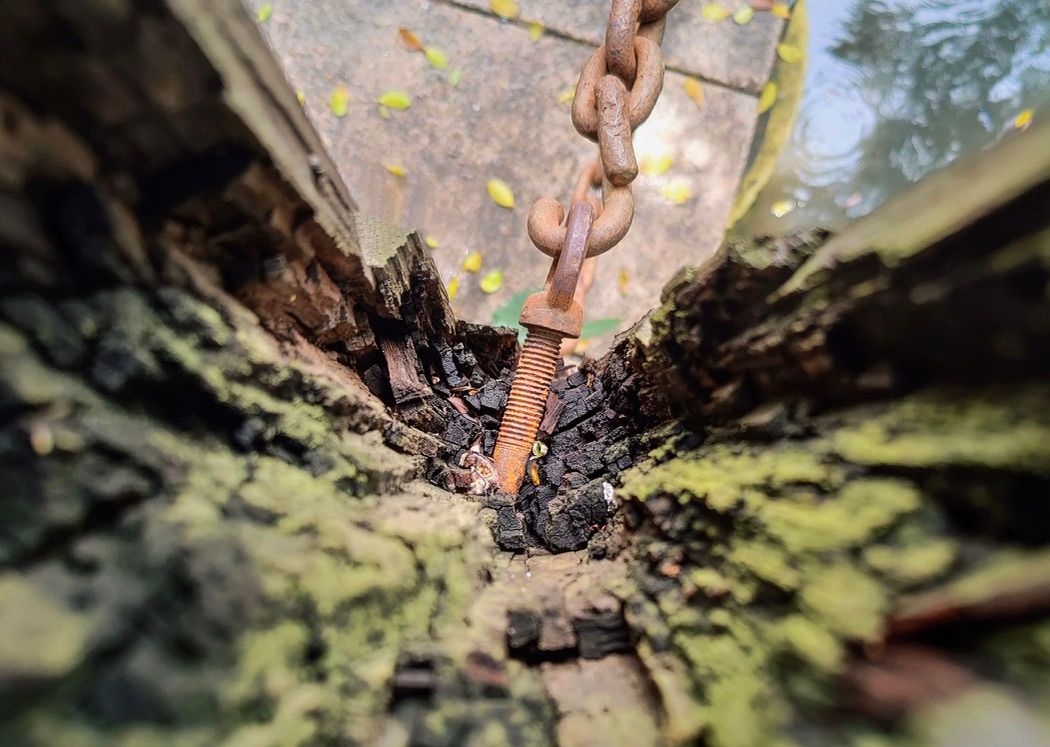
Time exists in two forms: rooted, standing firm in the soil; and flowing, moving forward in the stream.
Rooting is accumulation. Flowing is recombination. What's truly scarce is whether you've really seen life.
What keeps me grounded
Watching the boys grow
Time flies. My older son just turned three, and the little one hit his first birthday.
That's the magic of growth—changes become concrete on weekends. Every week brings visible shifts. The older one finally started kindergarten: running with a crowd delivers pure, uncomplicated joy. Humans need companionship and energy—no amount of toys at home beats a good chase and laughter at school. Through all that running and roughhousing, his vocabulary quietly expanded with expressions that surprised us, and his thinking grew faster and reached further.
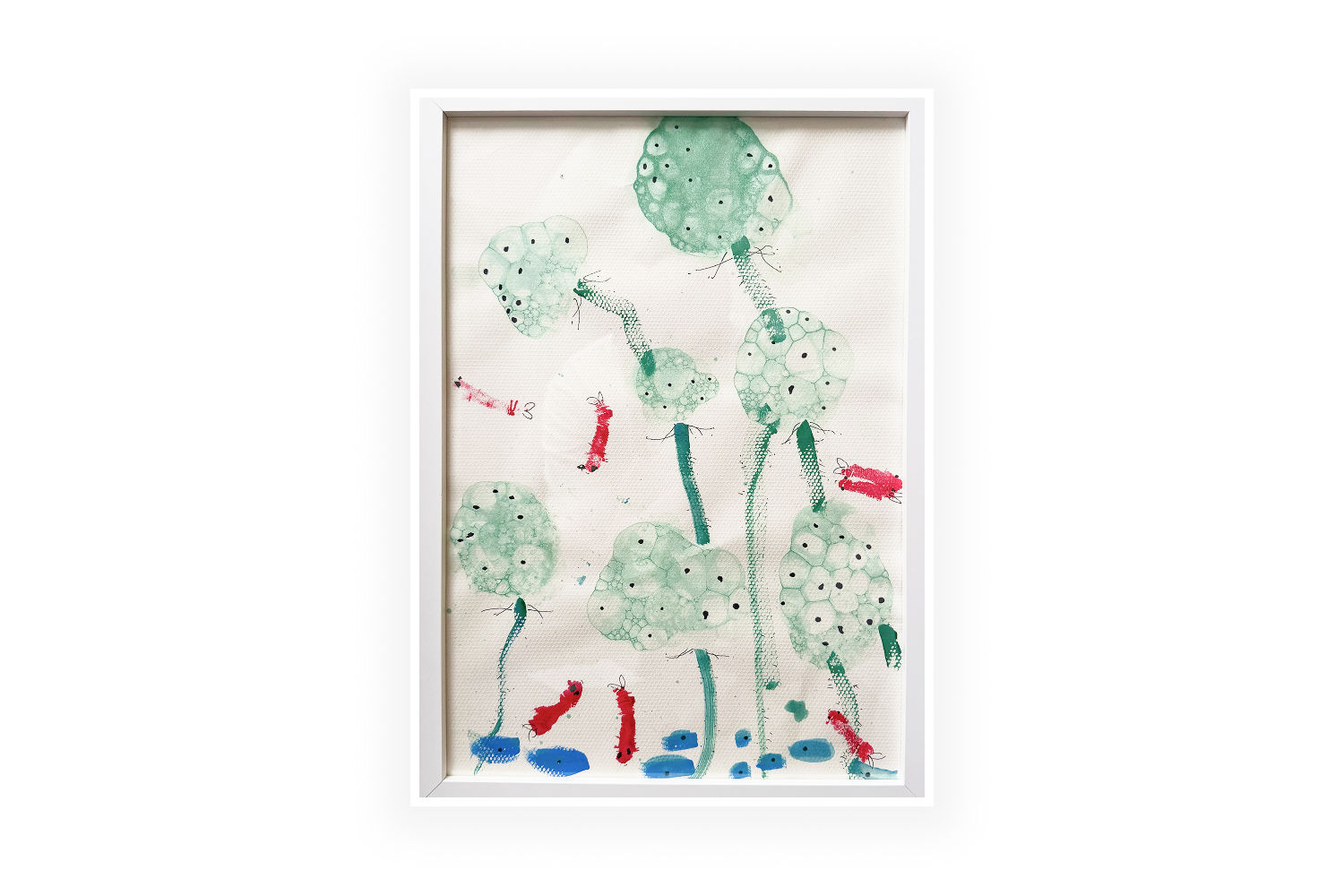
Kindergarten also brought sickness. The entire semester was a cycle of hospital visits, nebulizers, and medicine. His immune system is still adapting, and Guangdong's unpredictable weather doesn't help. There's no magic fix—just grinding through day by day. That's parenting: you can't shield them from everything, but you can walk beside them through every challenge.
This year brought ups and downs in our relationship. Sometimes I lose my temper, but after cooling down, the problem's still there. I'm still figuring out boundaries—should I set rules, how strict should I be? I want to teach him to be sharper, but you can't rush these things. No matter how angry I get, I always apologize before bedtime and make up—because I want him to know: I might get mad, but I won't leave.
Meanwhile, the little one just turned one and started his wobbly walk, stumbling forward with determination. Watching them grow, I realize... my heart is expanding bit by bit.
For the new year, I wish them health, curiosity, and freedom—to treat the world as an open field, to walk, to see, to become.
Hive's steady growth
I pushed 44 updates to Hive this year, maintaining a relatively high release frequency.
Hive matured significantly in stability and features, successfully adapting to OS 26's liquid glass design. From the universal filter and cross-platform quick save to smoother browsing and collage features, key workflows are now more complete. It went from "barely usable" to "worth trying," with one final stretch to reach my bar for "truly useful"—that's my main focus next year.
The bottleneck remains library migration. Sandbox restrictions make large libraries hard to read efficiently, and iCloud Drive—the most realistic option—is also the most frustrating due to slow sync speeds. Most Hive issues trace back to migration. Next year, I'll prioritize streamlining this pathway to create more predictable solutions.
I originally planned to start promoting Hive in Q4 but canceled it. Not for lack of desire—I simply lack the bandwidth. Promotion demands time and, more critically, brings more users, denser support requests, and more edge cases. Increasing traffic before reinforcing the bridge isn't wise. I'm still weighing the trade-offs while giving myself space to stabilize the foundation.
It's like building a bridge over a stream—the water constantly shifts, but the bridge must stand firm. For Hive, that "bridge" isn't traffic first—it's capacity.
Even without active promotion, Hive grew steadily through organic traffic. Year-end revenue reached 2.5× the start of the year with a smooth growth curve; download-to-purchase conversion exceeded 40%. This means incoming users are highly targeted, which means I should keep raising the bar on experience and stability rather than rushing to expand the user base.
To maintain stability, I've kept a primitive habit for support channels: email and Discord only. WeChat raises timeliness expectations too high and easily tangles feedback into chaos. Email encourages thoughtfulness and gives both sides async space—no rush, but every step is clear and traceable.
I've replied to hundreds of emails this year, and I'm increasingly convinced this is the right approach. Discord discussions are also valuable: people post questions and suggestions in different channels like forum threads, I respond one by one, and mark whether issues are resolved or features shipped. Users get clear, timely responses, and I keep problems in manageable order—these tools work better than WeChat.
Finally, I've captured some user praise for Hive. Those words genuinely fuel my drive to keep making it solid and smooth.
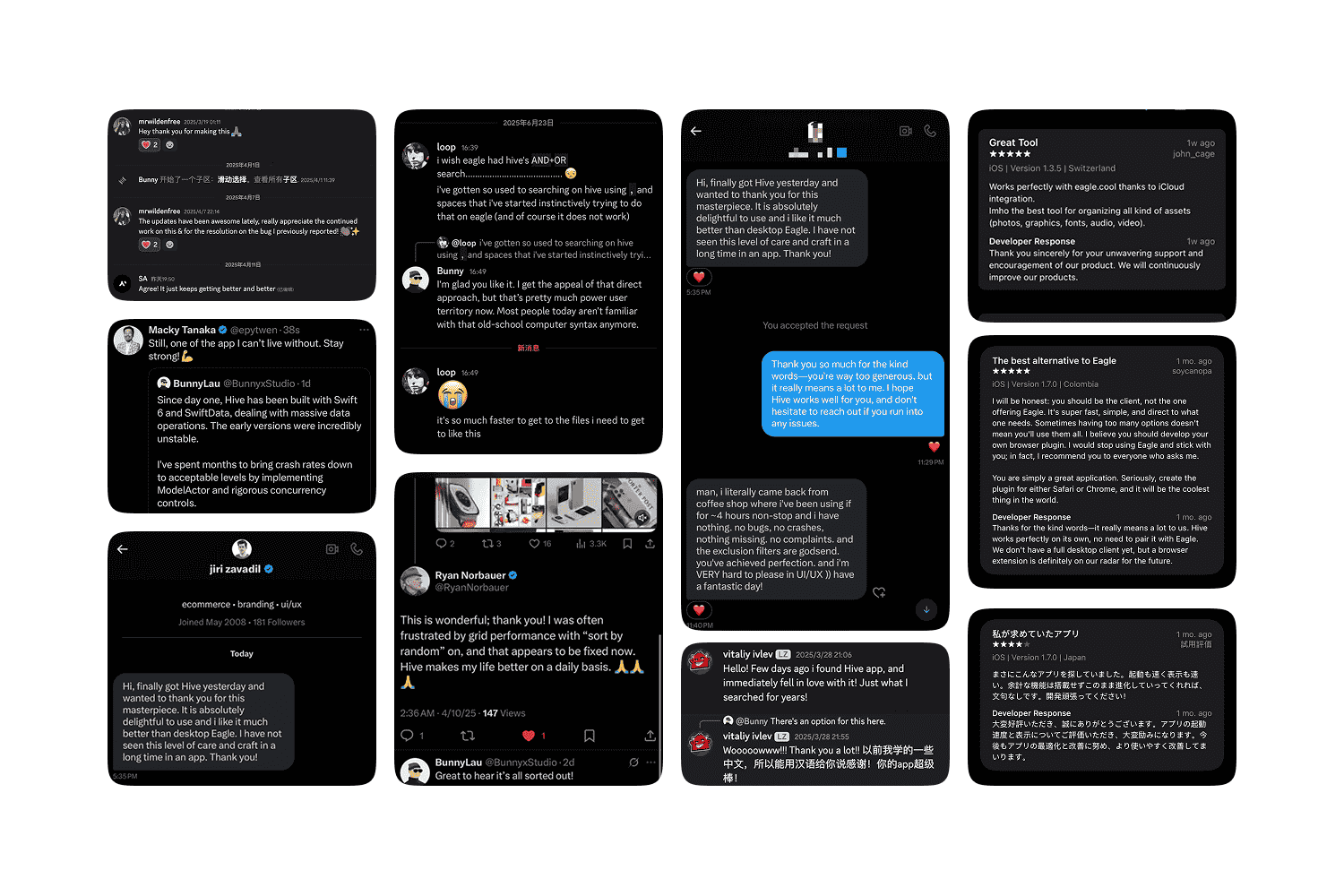
So I still want to take my time building it well, hoping everyone enjoys using it, accumulating and harvesting.
Reading as nourishment
I read several books this year in bits and pieces—each like a lamp lighting different places.
First, two books on parent-child communication. "The Book You Wish Your Parents Had Read" taught me: talking to kids isn't about endless patience but understanding the intent behind behaviors. Understanding comes first, then technique has a landing point. "How to Talk So Kids Will Listen & Listen So Kids Will Talk" is more like a repeatable toolkit—many phrases and steps you can apply immediately.
Following the thread of "understanding people," I read "Range." It shifted the question to knowledge structure: how breadth and depth support each other. In the AI era, breadth becomes a scarce capability—cross-disciplinary, cross-domain connections will unlock more solutions in the future.
Next, down to daily execution. "Atomic Habits" reminded me: lowering action difficulty matters more than setting bigger goals. Habits aren't for "hitting a one-time target" but shaping long-term behavior patterns. It gave me not motivation but sustainable order.
I spent the most time on "Thinking, Fast and Slow." It's tough, slow-burning, even dry in narrative, but the value lies precisely in that coolness: its depiction of human judgment and decision-making is razor-sharp. I especially appreciate the discussion on risk strategy—trusting broad framing, warning against excessive loss aversion under narrow framing. It makes me pause in daily choices and ask: What's framing me right now? What am I really afraid of losing?
In the final days of the year, I got "Design, The Next Step." It's not a typical "design techniques" book but more about why design exists: returning to human communication, to the transmission of life and spirit. The lifestyle described in that book resonates—no matter how busy, leave a little time to remind yourself you're alive; give yourself some space, not much, but enough to recharge your heart.
I hope next year I can continue borrowing this power from books: both doing things better and living more consciously.
What keeps me moving forward
AI's reshaping of the world
AI was definitely the most discussed topic this year. After a year of development, it's reached an undeniable level: my parents routinely use AI, and social media feeds are flooded with AI-generated content. It's not just a new tool—it's rewriting how we access information, express ourselves, and solve problems.
This is probably what it feels like when the tide rises—you can't ignore it because it's already past your ankles. More importantly, the tide doesn't just bring "higher water levels" but also "eroded thresholds": many things that used to require experience, skill, and time suddenly become within reach.
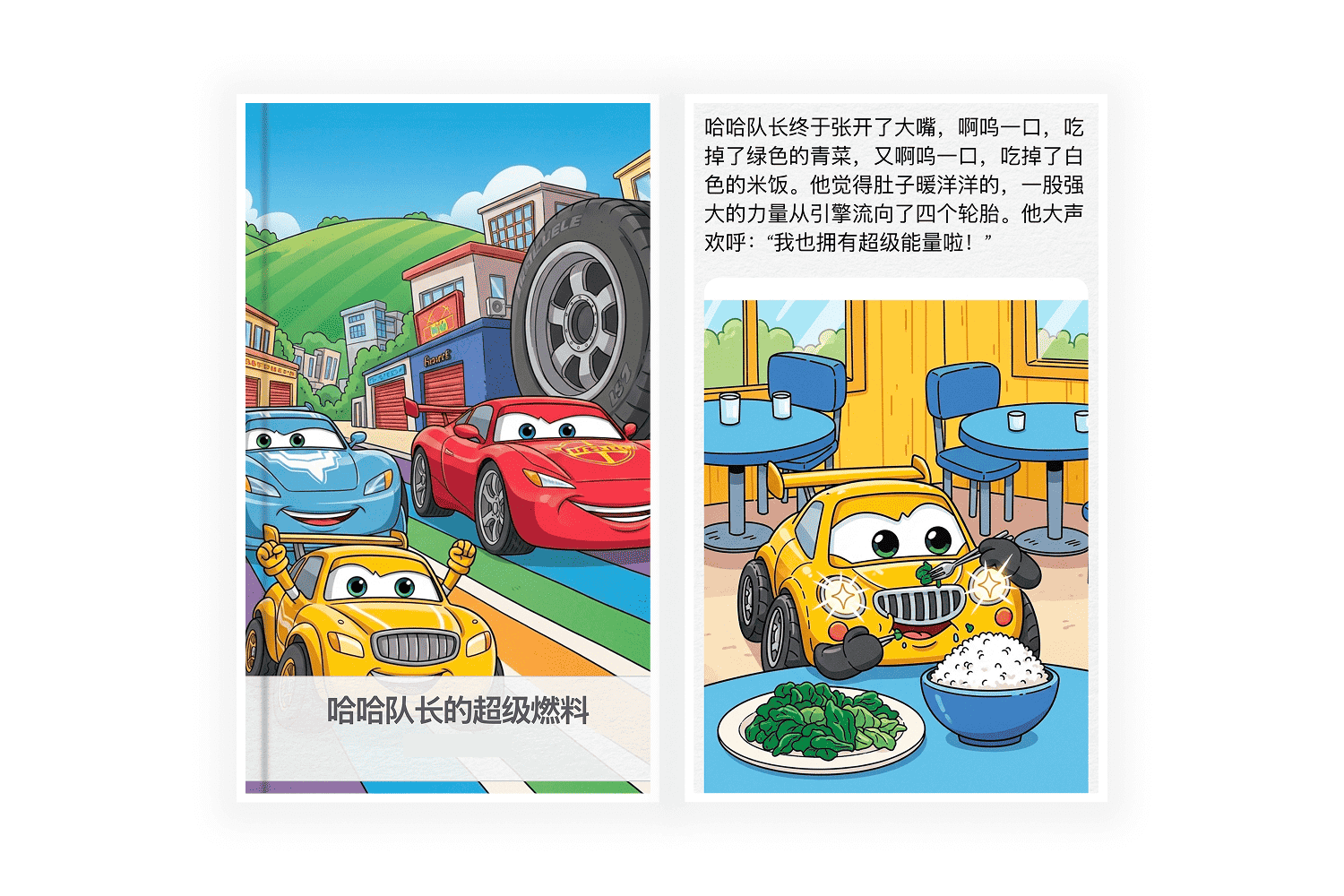
Gemini is definitely my favorite tool this year. I first truly realized its magic when I used it to generate picture books for my kid: customized by his imagination for characters and objects. For example, I made a "Captain Haha eats well to recharge energy" storybook featuring his favorite toy cars with customizable brands, and a plot about eating to fuel up for speed. Its appeal to kids far exceeds me lecturing him to eat properly—you're not "reasoning" but turning reason into a world he wants to enter.
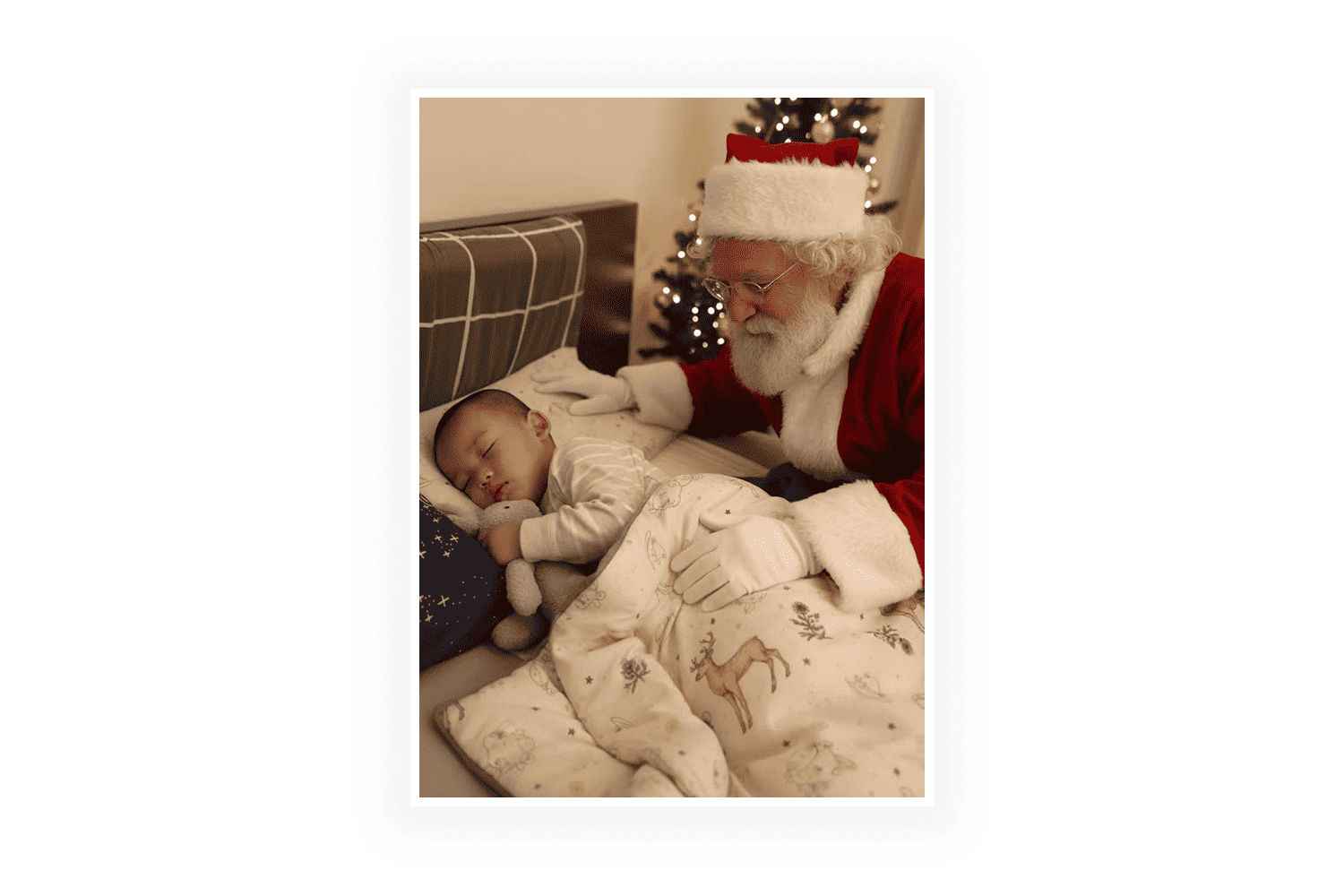
The second time was Christmas. I told him to sleep well and Santa would visit at night. Then I took his photo and used nano banana to generate an image of "Santa visiting him." Sometimes AI's most moving aspect isn't efficiency but turning previously impossible experiences into small miracles you can gift to family.
If Gemini turns imagination into gifts, Claude Code turns ideas into systems. It's the second product that astonished me: I never imagined code writing could be assisted to this degree. Recently I used it to build my personal website. Before, I relied on off-the-shelf tools like Notion, but UI couldn't be fine-tuned with many limitations; I'd considered semi-design/code solutions like Framer but always got stuck on time.
I'd never written web pages before. I originally planned to spend a day on the basic framework before deployment; ended up completing the original plan in 1 hour. It's not that things actually got simpler—someone with zero foundation might not be this fast—but the difference is: you no longer bounce between "don't understand—give up." AI provides immediate guidance, executable next steps, so your first entry into unfamiliar territory feels more like exploration and play rather than hitting walls.
AI makes "flowing" unprecedentedly easy: flowing from imagination to product, from not knowing to knowing, from an idea to deployment. Those thresholds that used to stop you have now been eroded smooth—you still have to walk, but you can finally move forward, and go further.
Looking back, I see Hive's position in this era more clearly: when "execution" becomes easier, what's truly scarce is what you've seen, what you've kept, and how you reorganize them into your own thing.
I find myself using Hive more and more. When I see a beautiful interface, an interesting narrative, a product detail, I naturally save it—from different fields, different styles, collect first and sort later. It's like a more personal "vision warehouse": capturing those fleeting inspirations before they disappear in the scroll.
What limited you before was imitation and execution capability; the future is more like one thing remains: where does imagination come from? People can barely imagine what they haven't seen; inspiration often depends on accumulation and recombination of what's seen and heard. So when everyone can produce content, the difference falls on taste: how much you've seen, how carefully you've looked, whether you've paid attention to what's in front of you.
Curiosity matters
In the future society, curiosity almost determines a person's ceiling.
I want to explore so much. My to-do list is like an unlit map: 3D printing, modeling, making a weekly magazine, writing a book, shooting a photo series... Each beckons to me. But reality is, there's never enough time. I also envy people who seem to have "unlimited time," so I often console myself: once I get through this busy period, when I have more time later, I'll definitely try them all.
But this "wait until later" mindset, beyond anxiety, also brings a bright feeling—the world isn't exhausted by me yet; so many possibilities quietly lie ahead, reminding me the future is still worth anticipating.
Later reading "Range," I understood this impulse's value more clearly. David J. Epstein points out: in complex domains, generalists often go further than narrow specialists; and "randomized" information keeps the brain alert, more conducive to long-term memory formation. In other words, learning doesn't require sticking to one path: alternating between coding development and user experience design might be more effective than only writing code for long stretches—you constantly switch perspectives while constantly building connections.
In the AI era, this "breadth" power is further amplified. Many difficult problems were never solved by one discipline alone but suddenly unlocked by borrowing another field's framework and methods. Future jobs will increasingly shift from "functional division" to "outcome delivery": you need to complete a task; as for what tools, what technology, what combination—that's your way of producing results.
So next time when you want to learn something new seemingly unrelated to your current "domain expertise"—go learn it. Allow yourself to get distracted, allow yourself to step out a bit. Those seemingly useless detours often become your most unique main path one day.
Regrets and reflections
This year's sleep was pretty terrible.
Objective reasons are clear: caring for two young kids inevitably fragments nights; the second half's repeated illnesses further degraded already unstable sleep. But the more subjective reason is equally clear—I didn't force myself to sleep earlier.
I believe many people are trapped in the same time window: 10 PM to midnight, even 1 AM, is the only completely personal leisure time of the day. You can code, learn new tools, read, watch shows during this period. The brain finds this offer hard to refuse, especially in this anxiety-inducing AI era—you always feel you need to absorb a bit more or fall behind. And sleep is always that option that can be casually compromised.
It's like standing in an abundant buffet, yet always feeling the food might disappear, so you can't help but grab a few more plates—even when already stuffed.
But I slowly realized: this is actually a very bad deal. I used to treat sleep as currency to exchange for waking hours; now I realize it's more like principal—once you overdraw, the body will eventually collect "interest." Sleep is almost the rare thing that significantly improves your state without requiring extra skills: restoring energy, stabilizing mood, enhancing memory and focus. Even weight management is tied to it. Rather than scrolling your phone for another half hour, sleeping another half hour is the truly worthwhile replenishment.
So I hope next year I can sleep a bit more each day than this year, even just one more hour.
The other thread from sleep deficit is weight gain—almost inevitable. Weight goes up, layered with a year of holding kids, squatting, soothing to sleep, and my knee finally gave out: year-end I had fluid drained, got anti-inflammatory shots, and MRI revealed meniscus wear. Can't do intense exercise short-term; this "forced stop" feeling is more sobering than pain.
This is probably the body's reminder—when the tide recedes, you see the exposed rocks: which problems were always there, just covered by busyness and excitement before.
What to do next is plain: sustained weight loss, unloading burden bit by bit. I hope this time next year, I'm a trim young guy traveling light, not someone daily reminded of aging by knees.
Rooted yet flowing—Expectations for 2026
Rooting: See more
About "rooting," I used to understand it as "standing firm"; now I slowly understand it's more like "seeing."
How much you've seen is breadth. This year, I increasingly rely on Hive to retain those "uncertain but want to keep" moments: a color relationship in an interface, a narrative's rhythm, an interaction's cleverness. They come from different fields, wildly different styles, some you can't even articulate what's good—just intuition saying—can't let this slip away. Over time, these fragments became my "vision warehouse."
How carefully you've looked is depth. The little boys taught me this: if you don't crouch down, you can't see. The older one's sudden new words, the little one's wobbly few steps—too subtle, so subtle you'll miss them if you blink. But once you see them, they leave deep marks in your heart.
Really seeing life is insight. "Design, The Next Step" reminds me to leave myself some time: not rushing ahead but stopping to ask—what have I actually seen? That difficult read "Thinking, Fast and Slow" reminds me to beware of automatic judgment: pause again and ask—what's framing me right now?
In 2026, I want to practice this ability to "see" more deeply.
Flowing: Recombine into new
About "flowing," I used to think it meant "change"; now I prefer understanding it as "recombination."
Imagination never appears from nothing. People can barely imagine what they've never seen; so-called inspiration, when unpacked, is often things you've seen, heard, read, reconnecting in some moment.
This is also the breadth value "Range" describes: the more diverse what you've seen, the richer the material in your brain for recombination. And the AI era's most interesting point is—it doesn't imagine for you, but makes "recombination" unprecedentedly easy.
T-shaped talent's "vertical" is depth, "horizontal" is breadth. Depth lets you stand firm, breadth lets you reach far; creativity often hides at their intersection—those seemingly unrelated domains suddenly connecting into a line one day.
So in 2026, I want to allow myself to explore some things more "uselessly." Those detours seemingly unrelated to current work might become my most unique main path one day.
Really see life
When everyone can produce content, the difference falls on taste.
This isn't some high-end aesthetic but a simpler question: Where is your attention spent? What do you choose to see? Have you really seen life?
Watching the boys grow teaches me—you can't see without slowing down; iterating Hive teaches me—when users say "not good," they often came with some expectation I didn't see; books also teach me—understanding intent behind behavior, recognizing your own thinking frameworks, understanding design isn't technique but communication.
In 2026, I want to keep practicing this ability to "see": not to produce faster but to perceive more keenly; not pursuing more input but deeper understanding. When others chase "the next hot thing," I'd rather put effort into—really seeing what's in front of me.
This is probably taste: how you allocate attention, and whether you're willing to spend time on things truly worth seeing.
Conclusion
Rooting and flowing seem contradictory but actually coexist.
Rooting is accumulation: seeing more, seeing more carefully, seeing life. Flowing is recombination: reconnecting what you've seen into something new in some moment.
The deeper the roots, the farther the branches; the longer the stream, the richer the banks.
In the AI era, "execution" becomes easier, "seeing" becomes harder. What I want to become isn't just a faster executor but a more keen observer.
When the tide rises again, those who used the low tide well naturally get closer to departure. And these preparations often hide in—whether you've really seen life.
See you next year.
End of Article